
For journalists, following activity on X is not idle curiosity.
It’s a reporting signal quiet, early, and often more revealing than a statement or a press release.
On a platform where public language is carefully managed, follows are one of the few actions that remain largely unguarded. People choose their words strategically. They choose who they follow instinctively.
That difference matters.
Who follows whom on X can surface:
- emerging alliances before they’re announced
- subtle narrative shifts before they’re published
- new sources before they speak on record
- political or institutional alignment before it hardens into policy
Following behavior doesn’t replace reporting. It sharpens it.
Well, can you find “Track Who Is Following Whom on X” here?
This article explains why following data matters specifically for journalists and how tracking turns something fleeting into something usable. People who are searching for a Twitter Follow Tracker Bot will find an answer for their searches in this article.
Why Following Data Is Newsworthy
Following someone on X is a public act. It’s visible, timestamped in reality (if not in the interface), and often intentional.
As a politician follows a journalist, it can signal openness, strategic outreach, or an attempt to influence coverage. When a corporate executive follows a regulator, it may suggest scrutiny, anticipation, or concern. When a media outlet starts following a new account, it often precedes sourcing, interviews, or narrative exploration.
These moments rarely come with announcements. They happen quietly, on the margins.
And very often, they come before:
- interviews are requested
- policy language changes
- narratives shift direction
- leaks begin to circulate
The follow is the footprint before the movement.
But only if you see it in time.
The Visibility Problem Journalists Face
X gives journalists access to the present, not the past.
You can see:
- who an account follows right now
You cannot see:
- when those follows happened
- who was followed yesterday or last week
- how relationships evolved over time
That means change disappears almost instantly.
A new follow blends into the list. A pattern forms invisibly. By the time it becomes obvious through posts, quotes, or official actions, the early signal is gone and with it, the chance to ask better questions sooner.
This isn’t a failure of attention. It’s a limitation of the platform.
How Tracking Turns Following Into a Reporting Tool
Tracking solves a simple but critical problem: it restores time.
Instead of asking “Do they follow this account?”, journalists can ask:
- when did this relationship begin?
- was this follow isolated or part of a cluster?
- did it coincide with an event, a leak, or a shift in coverage?
Tracking tools allow journalists to:
- monitor recent follows as they happen
- spot new relationships early, while they still matter
- verify timelines instead of reconstructing them after the fact
- support reporting with observable change rather than inference
This turns following data from speculation into evidence.
You’re no longer guessing intent. You’re observing sequence.
Practical Reporting Use Cases
In practice, journalists use recently following data to:
- monitor politicians’ new media connections before interviews surface
- track corporate executives’ expanding regulatory or lobbying networks
- notice when sources begin gravitating toward specific reporters
- identify early signs of narrative coordination or alignment
None of this requires private data. None of it involves intrusion.
It’s all public. It just needs to be preserved long enough to be seen.
Context, Not Surveillance
It’s worth stating clearly: this isn’t about spying.
Journalism relies on context understanding not just what is said, but what is happening around it. Following behavior is part of that context. Ignoring it doesn’t make reporting more ethical. It just makes it less informed.
Used responsibly, tracking following data helps journalists ask better questions, earlier, and with more precision.
Tools That Support This Workflow
Platforms like Circleboom support this kind of work by allowing journalists to track recent followers and followings of public accounts over time, without manual checking or guesswork.
With Circleboom’s Track Someone’s Most Recent X Followers and Following feature, you can track and analyze someone’s most recent X followers and following with detailed reports!
Here is how:
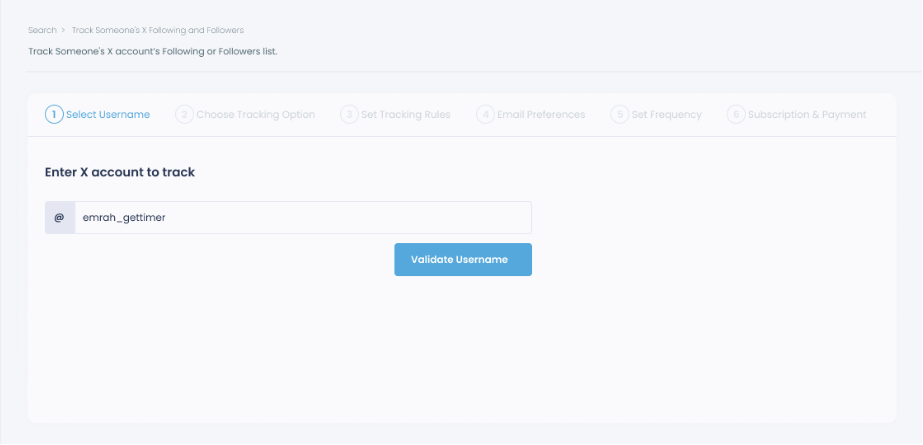
Step #1: Select any username you want to track on X.
You will track their recently followed audience.
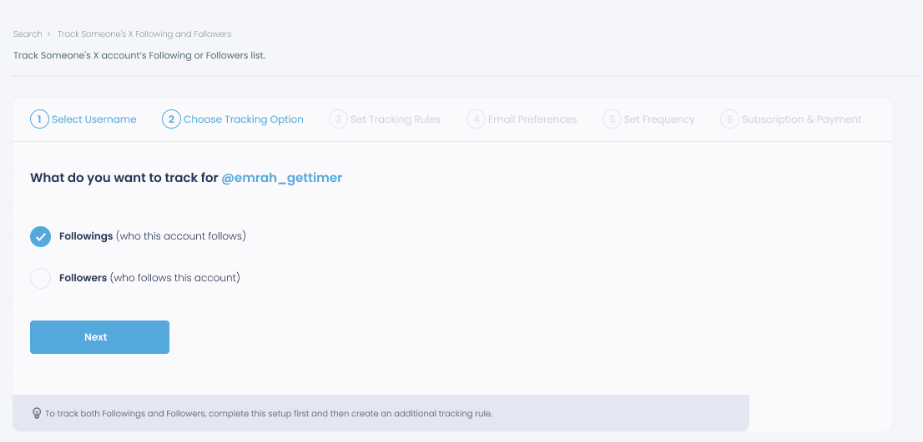
Step #2: Next, you will choose “Followings” or “Followers”.
You should select one of the tracking options.
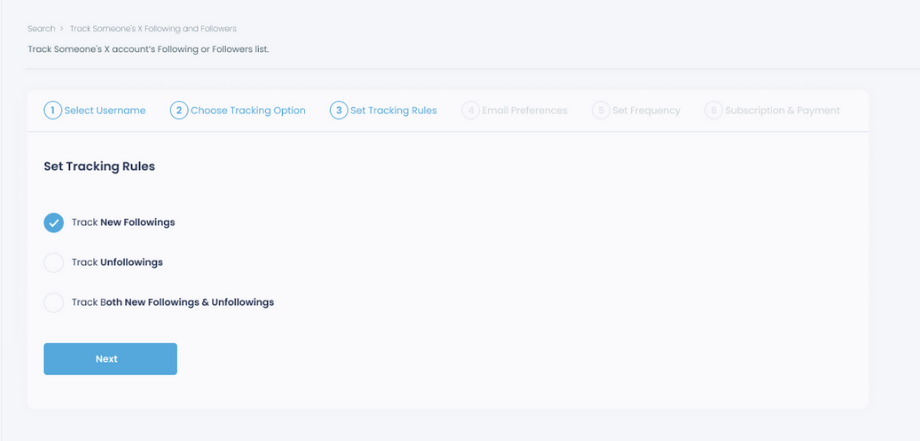
Step #3: Regarding the followings, you can track new, recent followings and unfollowings.
You can track both at the same time!
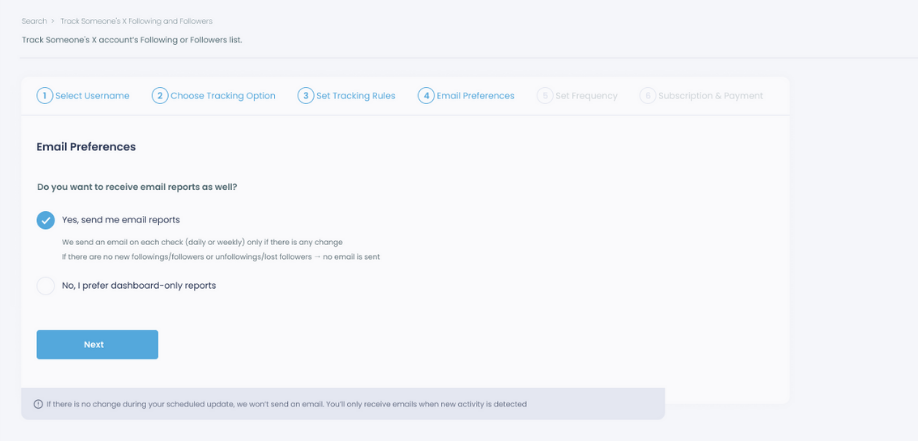
Step #4: For your tracking operations, you can receive email updates for each check.
You can still track new followings or followers without email notifications. You can monitor the following or followers with dashboard-only reports.
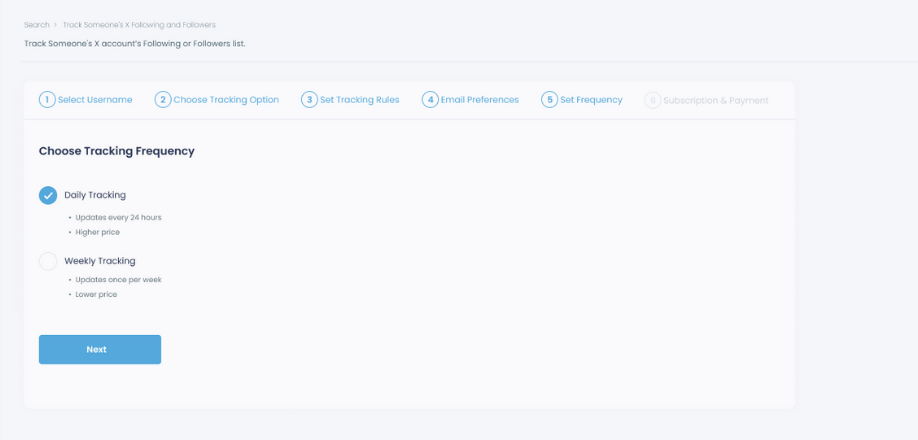
Step #5: Now, you should set the frequency.
You can get “Daily Tracking” or “Weekly Tracking”.
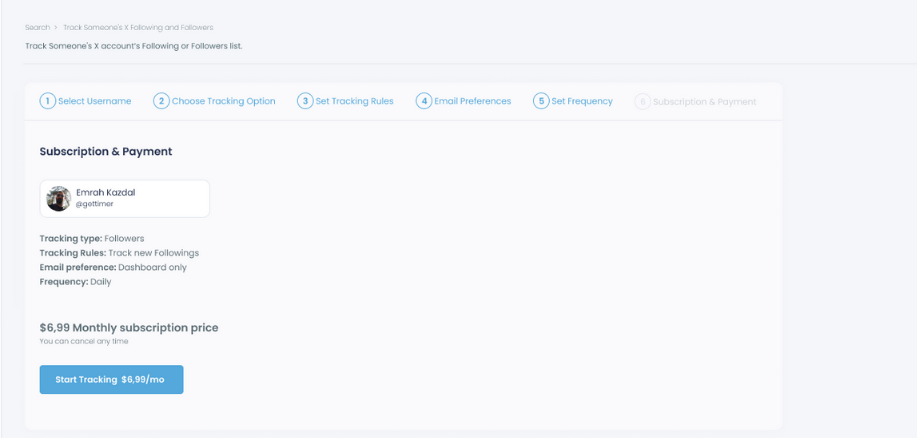
Step #6: The next step is subscription.
After checking the rules, you can start tracking.
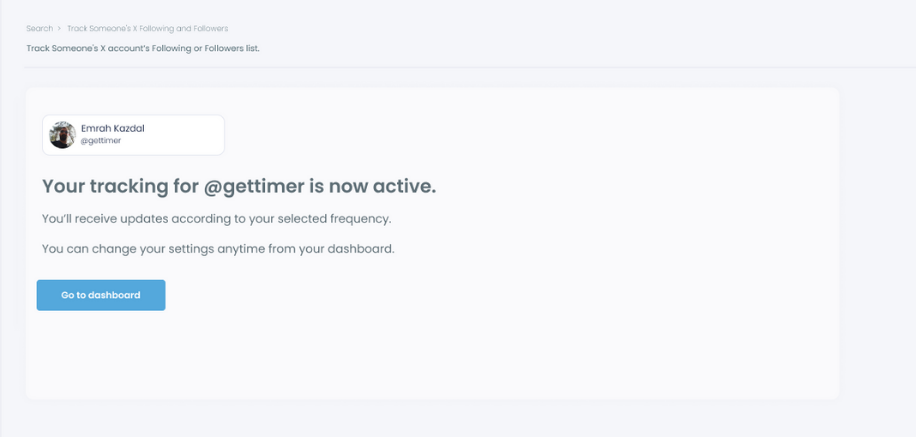
Tracking is now active. That’s it! Now you can monitor newly followings and followers of anyone on X with Circleboom!
That transforms X from a constantly refreshing feed into something more durable: a research layer, where change can be observed, compared, and understood.
Final Thoughts
For journalists, following data is not gossip.
It’s metadata. And metadata has a long history of breaking stories before headlines do.
On X, words are polished. Follows are not.
If you want to understand where power, attention, and narratives are moving next, following behavior is often where the trail begins quietly, and just early enough to matter.